

Jawahar Navodaya Vidyalayas (JNVs) are known across India for their strict discipline, organised hostel life, and strong academic culture. Many students and parents are curious about how life actually works inside a JNV hostel, when students wake up, what rules they follow, how PT happens, how many study hours they get, and what the daily routine looks like.
If you or your child is preparing for JNVST, understanding the hostel environment will help you know what to expect. This article explains the entire hostel routine, rules, study pattern, PT, mess timings, and discipline in simple English.
Why JNV Hostel Life Is Unique
Navodaya schools are fully residential.
Every student from Class 6 to Class 12 lives inside the school campus.
The hostel system is designed to teach:
- Self-discipline
- Time management
- Independence
- Teamwork
- Academic focus
The routine may look strict at first, but students soon get used to it and start enjoying the structured lifestyle.
JNV Hostel Routine: A Full Day Explained
Below is the complete day-to-day schedule followed in most Jawahar Navodaya Vidyalayas.
1. 5:00–5:30 AM – Wake-Up Call
Students wake up early in the morning.
Wardens or house captains ensure everyone gets out of bed on time.
Daily morning responsibilities include:
- Making the bed neatly
- Keeping the locker arranged
- Getting ready quickly
- Avoiding delays (late waking leads to warnings)
2. 5:30–6:30 AM – Morning PT
Physical training is compulsory for all students.
PT includes:
- Jogging
- Warm-up exercises
- Yoga
- Basic drills
- Stretching
Morning PT improves fitness, energy, and concentration for the rest of the day.
3. 6:30–7:30 AM – Bath & Hostel Cleanliness
After PT, students take a bath and clean their rooms.
Hostel cleanliness rules:
- Bed sheets must be wrinkle-free
- Shoes should be polished
- Clothes must be clean
- Bathrooms must be used responsibly
- Lockers should stay organised
Daily inspections help students develop clean habits.
4. 7:30–8:00 AM – Breakfast in the Mess
Breakfast is served in the school mess.
Common items include:
- Milk
- Poha/Upma
- Roti-sabzi
- Parathas
- Sprouts or fruits
Food is nutritious and planned to keep students active.
5. 8:00 AM–1:00 PM – School Hours
Students attend regular classes based on the CBSE curriculum.
School rules include:
- No late entry
- Homework must be completed
- Clean desks and classrooms
- Weekly tests
- Diary monitoring by teachers
6. 1:00–2:00 PM – Lunch & Short Rest
Lunch is balanced and includes:
- Rice
- Dal
- Roti
- Vegetable curry
- Salad
After lunch, students get some time to rest in the hostel.
7. 2:00–4:00 PM – Remedial Classes / Library Hours
Depending on the student’s performance:
- Weak students attend remedial sessions
- Others go to the library for silent study
This period helps students improve academic performance.
Evening Routine in JNV
Evenings in JNV are a mix of sports and study time.
8. 4:00–6:00 PM – Sports & Games
Sports are compulsory for all students.
Common sports:
- Volleyball
- Football
- Basketball
- Kho-kho
- Kabaddi
- Athletics
- Table Tennis
- Badminton
Games build teamwork, fitness, and leadership qualities.
9. 6:00–7:30 PM – Evening Study (Prep Time)
Students sit quietly in classrooms or study halls.
Rules:
- No talking
- Complete focus
- Self-study only
- Wardens supervise
This is one of the most productive study sessions of the day.
10. 7:30–8:15 PM – Dinner
Dinner is simple and healthy:
- Roti
- Sabzi
- Dal-rice
- Curd (sometimes)
- A sweet dish once a week
11. 8:15–9:30 PM – Night Study
Night study is compulsory for all students.
Activities include:
- Homework
- Revising lessons
- Preparing for the next day
- Clearing doubts quietly
Higher classes get extended study time.
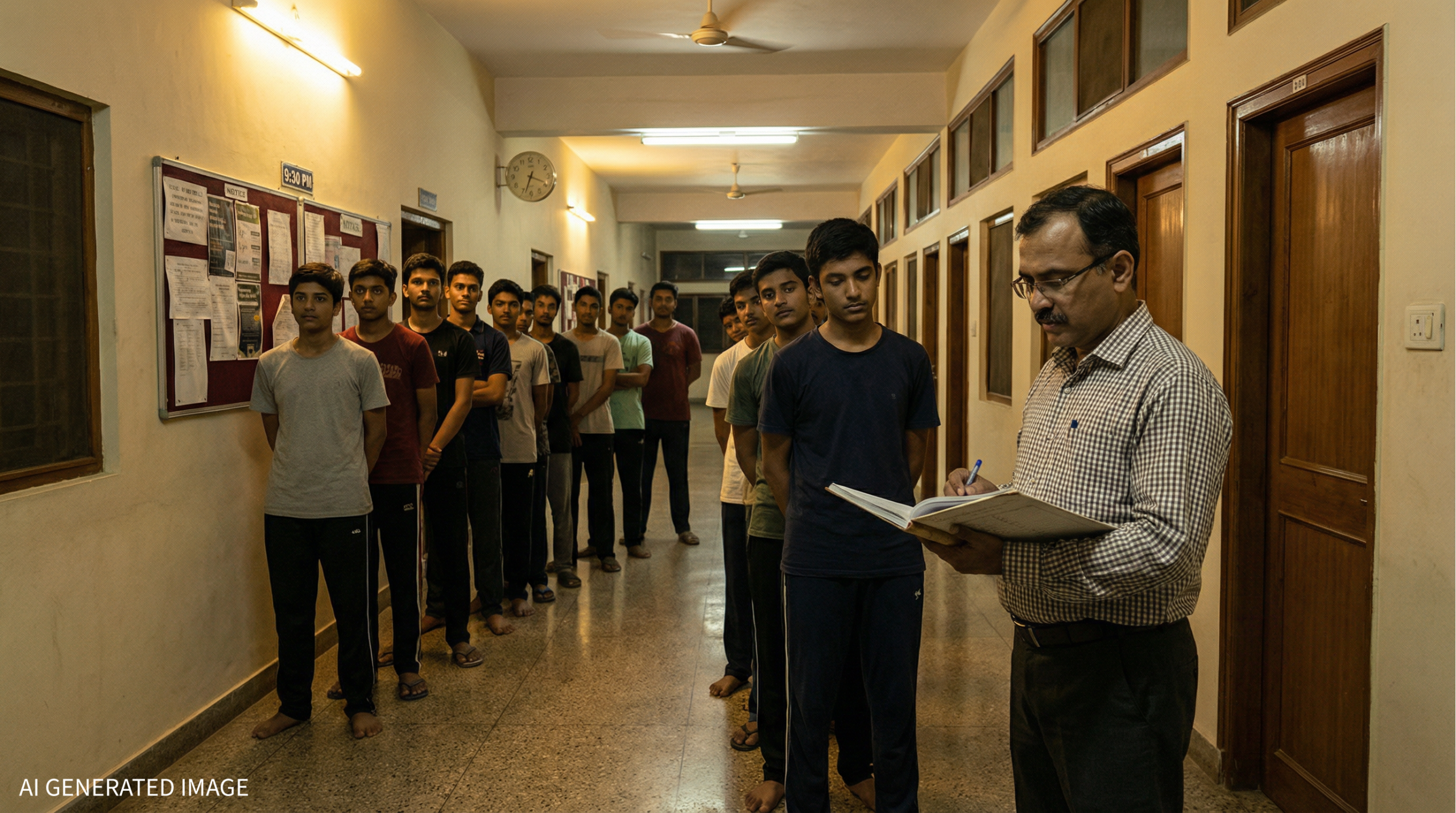
12. 9:30–10:00 PM – Attendance & Lights Off
Every student must report during night attendance.
After lights off:
- No movement allowed
- No noise
- No late-night talking
- No mobile phones
The day ends with complete discipline.
Important JNV Hostel Rules
1. Discipline Comes First
Students must follow:
- Timely wake-up
- Regular study hours
- PT routine
- Proper behaviour
2. Ragging Is Strictly Banned
Navodaya campuses have a zero-tolerance policy.
3. Seniors Help Juniors
Seniors guide younger students, especially during the first few months.
4. No Electronics Allowed
Not allowed:
- Mobile phones
- Smartwatches
- Tablets
- Laptops
Allowed:
- Basic watch
- Books
- Stationery
5. Cleanliness Is Mandatory
Students must maintain:
- Clean beds
- Organised lockers
- Polished shoes
- Washed uniforms
Why JNV Hostel Life Helps Students Succeed
Students develop:
- Confidence
- Discipline
- Time management
- Physical fitness
- Academic strength
- Social skills
- Leadership qualities
This is why many JNV students succeed in:
- JEE
- NEET
- NDA
- UPSC
- Olympiads
- Dakshana coaching
The Final Note
JNV hostel life may look strict, but it builds strong habits for life.
Students learn discipline, responsibility, and teamwork.
If you plan to join Navodaya, this routine will prepare you mentally for what’s ahead.
FAQs
Q1. Are mobile phones allowed in the JNV hostel?
A: No, mobile phones are completely banned for students in JNV hostels. The rule ensures full focus on studies, discipline, and a distraction-free learning environment every day.
Q2. Is the food in the JNV mess healthy for students?
A: Yes, JNV mess food follows a planned weekly menu designed for balanced nutrition. Students receive proper proteins, carbs, vegetables, and milk to support energy, growth, and overall well-being.
Q3. Is night study compulsory for all students in JNV?
A: Yes, evening and night study sessions are mandatory. These fixed study hours help students maintain consistency, complete homework, revise lessons, and perform better academically throughout the year.
Q4. Do seniors trouble or bully juniors in the JNV hostel?
A: No, ragging is strictly prohibited in all JNVs. Seniors are trained to guide younger students, create a friendly environment, and support them during the initial adjustment period.
Q5. How does hostel life help students succeed in JNV?
A: Hostel life teaches discipline, routine, teamwork, and time management. With structured study hours, PT, sports, and guidance, students develop habits that support long-term success in exams and life.